Showing posts with label Film. Show all posts

Saturday, 15 April 2017

Review: Justice League vs. Teen Titans


After disobeying orders during a mission with the Justice League, Robin is reprimanded and sent to learn about teamwork from the Teen Titans. Though he clashes instantly with the group of teenage heroes, Robin is drawn to the enigmatic sorceress Raven. It’s through this connection that Robin is convinced to help the team as they are drawn into a battle with the demonic villain Trigon.

Justice League vs. Teen Titans is a 2016 animated film directed by Sam Liu and features the voices of Stuart Allan, Taissa Farmiga, Jerry O’Connell, Jason O’Mara, and Rosario Dawson.


The storyline for Justice League vs. Teen Titans is loosely adapted from The New Teen Titans #4-6 by Marv Wolfman and George Perez. In both versions, the Teen Titans race against the clock to prevent Trigon from entering into our dimension and turning the planet into a hellish wasteland. Where they differ is in the film’s lack of cohesion and the divergence from the canon. Justice League vs. Teen Titans essentially tries to be a sequel to Justice League: Throne of Atlantis and Batman: Bad Blood and a spin-off for the Teen Titans. The product that director Sam Liu and screenwriters Bryan Q. Miller and Alan Burnett put together feels like a cobbled together mess of two films crammed into one. The presence of the Justice League throughout feels unnecessary, especially since there’s a forced continuation of the relationship between Superman and Wonder Woman that takes away precious screentime from the film’s true stars (the Teen Titans). Furthermore, the absence of Aquaman, Green Lantern, and Shazam isn’t addressed in a satisfying way.


This film is at its best when it focuses on the Teen Titans and is actually really entertaining when it actually explores the interpersonal relationships between the characters. The rivalry between Robin and Beast Boy proves to be rather amusing, which culminates in a (somewhat dated) scene where they compete against one another in a game of Dance Dance Revolution. Similarly, Robin and Raven make for an interesting duo. The sullen bird-named heroes both have villainous father figures (an actual father in Raven’s case). There’s also a sense that Robin may have the inklings of romantic feelings for Raven, which is admittedly kind of cute. Unsurprisingly, Robin and Raven are the standout characters of this film, the latter especially due to her having a fully developed character arc. That said, there is an uncomfortable exchange between Raven and one of the male members of the team when she retells the story of her conception. Whether it was Miller or Burnett who wrote the dialogue, their flippant approach to making a punchline out of an instance of implied sexual assault is disgusting.


The same, however, cannot be said about Blue Beetle and Starfire. Blue Beetle is a rather obvious stand-in for Cyborg, whose status as a Titan was nullified by being a founding member of the League instead. He’s given very little to do throughout and there’s not much to convey that he has a personality. With Starfire, who has a couple of eyeroll worthy fan service moments, she comes across as a glorified babysitter who seems to be constantly hovering around the team. In fact, it was a major misstep to have her serve as the team’s mentor. This is probably more of a personal preference than an objective criticism though. For one thing, Starfire is portrayed in this film in a rather dippy manner, especially giving the lilting tones that Kari Wahlgren uses. As such, it seems her characterization draws more from the 2003 cartoon than the comics. Furthermore, all of her lines and the role itself would have been more effective had they been given to Donna Troy. She’s a better leader, a far more nurturing individual, and would likely not have been portrayed as if she had nothing but air rattling around between her ears. Quite frankly, the continued mistreatment of Donna at the hands of Warner Brothers and their employees is irritating and is disrespectful towards the legacy and importance of Wonder Woman. The legal red tape is no more, so stop leaving her in the dustbin. She’s an amazing character, one of the best you all have, so start putting her in adaptations!


Justice League vs. Teen Titans is one of the weakest entries into the DC Animated Movie Universe, which is a shame because it’s adapted from such a seminal comic book series. The character designs, performances (Rosario Dawson in particular continues to shine as Wonder Woman), and direction overall is quite good, but it’s the writing that drags the quality down. It juggles one too many subplots and has an unwieldly large cast that is woefully underdeveloped. It would have been more effective as a film had it stuck closer to the source text (this means having both Donna and Wally as part of the cast) and if it kept the Justice League members to cameos. As it is, Justice League vs. Teen Titans is a bit of a mess with occasional stints of compelling character moments.


RATING: C+

Saturday, 6 August 2016

Review: Batman vs. Robin


With Batman and Robin’s relationship left strained after a mission gone awry, Robin begins distancing himself from his father and mentor. He agrees to a dubious partnership with the assassin known as Talon, while Bruce Wayne is invited to join the ranks of the elusive (and filthy rich) Court of Owls. Batman and Robin must repair their relationship in order to survive the nefarious schemes of Talon and the Court of Owls.

Batman vs. Robin is a 2015 animated film starring Jason O’Mara, Stuart Allan, Jeremy Sisto, Sean Maher and David McCallum.


Based very loosely off of Scott Snyder and Greg Capullo’s critically-acclaimed “Night of the Owls” storyline, Batman vs. Robin sees its titular characters facing off against one another while the wicked Court of Owls plots to unleash their powerful assassins on Gotham City. Where Snyder and Capullo’s arc concentrated on Batman and established a new set of mythologies surrounding Gotham’s past, this film shifts its perspective to focus on the unraveling relationship between father and son. This departure from its source text wasn’t as effective as it could have been as it offers little character development and stumbles with its portrayal of the film’s antagonists.


The film opens with Robin going off solo on a mission to recover missing children from a psychotic villain known as Dollmaker. Batman is furious at Robin for his perceived recklessness and is bothered by his unwillingness to work as a team. While Batman vs. Robin wants its viewers to see Robin as an impetuous boy rebelling against his father, it comes across more as a young boy seeking his independence from an authoritarian that is denying him freedom. There’s a clear sense of the “my way or the highway” mentality with Batman, which is ultimately skewered later on by Alfred who recognizes such stifling will only drive Robin further away from his mentor. In this respect, Batman more or less drives Robin right into the proverbial arms of Talon. Let’s get one thing straight, Damian Wayne is often the most intolerable of the Robins in the comics and his bloodlust and rebelliousness is often quite irritating. However, the version we see in the DC Animated Movie Universe seems less reactive and like he’s genuinely trying to be a good hero. This makes it all the more infuriating to see Batman refuse to give him the benefit of the doubt in any given situation.


As far as villainous organizations are concerned, the Court of Owls is one of the most intriguing comic book creations in a good long while. They were envisioned as an ancient cabal of aristocrats who have been pulling the strings in Gotham City for centuries. There was even a creepy nursery rhyme invented to describe them. The Court of Owls thus became a shadowy organization that operated in the very veins of Gotham City, giving further depth to DC Comics’ most famous locale. Sadly, Batman vs. Robin gives them a very cursory portrayal. We don’t get the same scope as we do in the comics and they feel like secondary characters in a storyline that’s so heavily focused on Robin. That’s not to say that they’re not great villains. The reveal of the identity of the leader of the Court of Owls is a nifty twist and the final battle against the Talons pushes all of the film’s heroes to their limits. The assassins are an incredible threat and deal some rather stomach-turning damage to Nightwing. The film even allows itself to portray Batman as fallible and beatable, something fans often deny.


Like its predecessor Son of Batman, Batman vs. Robin excels with its action sequences and is overall an entertaining film. We’re once again invited into an adventure through which Robin is our eyes and ears. We relate to him and follow him as he’s doubted and cast out by a restrictive father who disapproves of his past. The film has its shortcomings (why do these Batman animated films always feature so few female characters?) and it really hinders its chance to be considered a homerun. It’s clearly inferior to its source text and it feels more like an episode of a TV show than an actual film, but there’s no denying that viewers will feel invested in these characters and that the action is totally engrossing.

RATING: B-

Friday, 6 May 2016

Review: Justice League - Throne of Atlantis


When an American submarine is mysteriously attacked, the Justice League is deployed to investigate. They soon discover that the sub was assaulted by Atlantean warriors, prompting the team to scramble to find the mythical underwater kingdom before a war is unleashed on the surface.

Meanwhile, the eldest son of the Queen of Atlantis must learn to accept his heritage and prevent his younger brother from enslaving the world above.

Justice League: Throne of Atlantis is a 2015 animated film starring Jason O’Mara, Jerry O’Connell, Rosario Dawson, Nathan Fillion, Shemar Moore, Sean Astin, and Matt Lanter. It is an adaptation of the graphic novel Throne of Atlantis, written by Geoff Johns and illustrated by Ivan Reis and Paul Pelletier.


Justice League: Throne of Atlantis functions as both a sequel to JusticeLeague: War and as an origin story for the hero Aquaman. As such, this is a movie that struggles with what it wants to be. On the one hand, it’s the story of how the Justice League accepts their role as Earth’s greatest heroes. On the other, it’s the story of how the half-blood prince Arthur Curry becomes the King of Atlantis. These two narratives are constantly at odds with one another, warring for prominence over the course of the film’s 72 minute running time.


By eschewing Aquaman from the preceding film in this series and shoehorning his narrative into the story of Orm’s war on the surface world, we get a surprisingly overstuffed film despite its relatively short running time. What we get a lot of are great character moments. We see Cyborg’s struggle to embrace his humanity even though he is mostly machine, leading to some standout interactions with the civilian Sarah and his teammate Shazam. We also get some cute moments between Superman and Wonder Woman, who have begun dating due to their mutual similarities. The majority of the attention though goes towards Aquaman. Though this should be a good thing, the problem is the focus shifts too often with how we’re supposed to empathize with and relate to him. The film deals with his mourning of his father, the impending responsibility of ruling Atlantis, his budding attraction to Mera, his hatred for his half-brother Orm, and his mixed feelings towards his mother. While all of these things are fantastic and worthy of being explored, the fact that Throne of Atlantis attempts to tackle all of these subplots makes the film pretty crowded and unfocused.


Much like Justice League: War, this film struggles with its cast and finding the right balance. Also like its predecessor, it gives us a terrifyingly powerful villain and some incredible action to go along with it. Orm is presented as the Big Bad of this movie and he truly does live up to that status. He single-handedly takes down the Justice League in one of the most harrowing climactic final battles within the DC Universed Animated Original Movies line. He’s brutal and relentless in his pursuit for power, viewing everyone around him as weak. It’s clear he places more capital on politics and legitimacy than love, which makes him extremely dangerous.


The animation from this line of films continues to impress. It’s clean, expressive and each character has his or her own unique look. The new characters have pretty neat designs. Aquaman is very sleek and his costume is a nice modern update on his classic orange and green uniform. Queen Atlanna is another standout, particularly due to her elegant styling. This gives her a sense of gravitas. There is one disappointment though – Mera. I absolutely adore the character and think she’s portrayed as the fierce warrior she truly is. Sadly, her design is lackluster. Her hair is pulled tight into a high ponytail, which somehow makes her look bald. Her headdress isn’t terribly pretty and her outfit itself looks as if it’s a knock off of Chun-Li’s blue jumpsuit from the Alpha line of Street Fighter video games.


Even though Justice League: Throne of Atlantis was somewhat below Justice League: War in terms of quality, I still found it to be a highly entertaining film. Despite its unfocused narrative, the characters are all very distinct and are performed well by a talented voice cast. It’s a film that gives us a fresh, new take on Aquaman and provides us with hands-down the most badass version of Mera we’ve seen in an adaptation thus far. Justice League: Throne of Atlantis is enjoyable as an Aquaman film and does its job of establishing him as a force to be reckoned with. However, as a Justice League movie, it falls short of its target.

RATING: B 

Tuesday, 26 April 2016

Review: Son of Batman


When the mercenary Deathstroke stages a coup to seize control of the League of Assassins, Talia al Ghul seeks out Batman to help protect the League's rightful heir. As it turns out, said heir also happens to be the Dark Knight's son. With this new revelation hanging over his head, Batman must stop Deathstroke and learn to cope with his wayward son.

Son of Batman is a 2014 animated film starring Jason O'Mara, Stuart Allan, Morena Baccarin, Thomas Gibson and David McCallum. It is based off of the 2006 graphic novel Batman and Son, written by Grant Morrison and illustrated by Andy Kubert.


As the sixth Batman-centric film from DC Universe Animated Original Movies line, Son of Batman is less about the Dark Knight himself and more about his spunky new sidekick. We're introduced to Damian Wayne in the film's opening scenes as Ra's al Ghul's loyal grandson and as a fearsome warrior in his own right. From then on, much of the action of the film pivots on Damian as a character and his development from unquestioning assassin to Batman's partner. The film hits all the right notes with Damian in this respect. He's got significantly more attitude than any previous Robin and he's also the most violent, but this also means he has the most to learn about being a hero from Batman. As such, Son of Batman becomes a story of Damian's growth from would-be villain to reluctant hero.


While this film is an adaptation of Batman and Son, many changes are made to alter the characters and narratives of the source text. Damian's behaviour, for instance, is toned down. Tim Drake is also phased out as Batman's partner in the film in favour of using Dick Grayson instead. The most notable change, however, was the shifting of antagonists. Batman and Son was a character assassination of Talia al Ghul, transforming her from Batman's true love to being an all-out murdering rapist. Morrison played fast and loose with Talia's character and past, making her out to be someone she wasn't. The writers and producers of Son of Batman rectify that. Talia is far more affectionate and caring in this film, looking out for Damian's best interests. With Talia firmly rooted in the role of protective mother (and later damsel in distress - eye roll), Deathstroke steps in as the film's villain.


Deathstroke fits in remarkably well within the narrative of the League of Assassins and is the ideal villain for this story. His motivations are carefully laid out and certainly makes him seem far more power-hungry than the lame version we got in Arrow. Interestingly, the film doesn't explore the notion of Deathstroke being a rival to Batman. We do know that Slade was miffed about Talia falling for Bats, but the focus never wavers from the grudge between him and Damian. In this sense, it's a little less predictable and convinces audiences to invest more in Damian.


The animation for Son of Batman follows the same style of Justice League: War, as it should considering they're meant to be within the same continuity. There's a vague anime quality to it, in addition to its vaguely noir aesthetic. The settings provide a very rich background for the story to play off of. From Gotham City's harbour to the League of Assassins home base, we see a veritable tapestry of looks for this film. I'm also rather fond of the character models. Batman's is a little off, particularly due to his overlong ears, but the rest look pretty snazzy. I'm particularly obsessed with the look Talia sports, as it's a beautiful update on what she looked like in the DC Animated Universe. Also worth noting are all of the carefully choreographed fight scenes. This film features some pretty cool action sequences that are among the best from the DCUAOM line.


Son of Batman is an entertaining film through-and-through. Despite its lack of focus on Batman himself, I do like the dynamic established between Damian and his father. I also appreciate the effort put into developing Damian as a multi-dimensional character. In fact, one of my favourite scenes occurs near the end when he is reunited with his mother. It's a sweet scene that illustrates the good aspects of both his character and Talia's. Son of Batman is full of action too and it's bloody action at that. Fans of Batman are sure to be satisfied with this film, but those who are on the fence about Damian's character aren't likely to be swayed. Also, did Talia al Ghul really have to be a damsel in distress? That's my one big complaint. Other than that, Son of Batman is pretty darn enjoyable.

RATING: B

Sunday, 17 April 2016

Review: Justice League - War


When a string of mysterious kidnappings force Batman and Green Lantern into a reluctant joint investigation, they discover that it is part of a much larger plot to initiate an alien invasion on Earth. They must then team up with the world’s greatest heroes – Superman, Wonder Woman, the Flash, Shazam and the newcomer Cyborg – in order to stop the invasion and defeat the seemingly unstoppable menace Darkseid.

Justice League: War is a 2014 animated film starring Alan Tudyk, Jason O’Mara, Michelle Monaghan, Justin Kirk, Christopher Gorham, Shemar Moore and Sean Astin. It is based on the graphic novel JusticeLeague: Origin by Geoff Johns and Jim Lee.


Justice League: War serves as the origin story for the Justice League under the new continuity set within the DC Universe Animated Original Movies canon and smartly adapts Johns’ and Lee’s best-selling series from DC Comics’ New 52 initiative. As with any good superhero team-up story, an alien invasion breaks out and it’s up to the titular band of heroes to stop it. This narrative can be stale, particularly considering how it was also used in the seminal Justice League and the record-breaking Marvel’s The Avengers. Yet, Justice League: War proves itself to be an endlessly entertaining 79 minutes of incredible non-stop action. What helps this film to stand out is its terrifyingly powerful antagonist and the distinctive personalities of the protagonists.


Much of the praise for Justice League: War deserves to land squarely in the lap of Geoff Johns and Jim Lee. They were the ones who laid down the foundation for this film with their work on the source text. In fact, much of the dialogue and scenes are taken straight from the pages of Justice League: War. This is partly why the characters seem so vibrant and brimming with personality. The dialogue between Batman and Green Lantern proves to be quite hilarious, while Wonder Woman’s flip-flopping between the naïve fish-out-of-water to fearsome warrior serve as standout character moments. In fact, some of the funniest scenes in the film come directly from the source material – notably Batman removing Green Lantern’s ring to prove a point and Wonder Woman’s infamous ice cream experience. This levity helps the film from feeling too dark and gives it a sense of light-heartedness.


Unfortunately, some of the flaws that were present in the source text ended up being translated to Justice League: War. With the exception of Cyborg, none of the characters in the film are given any kind of expository origin story. Some of the characters are defined rather well – Batman is a shadowy vigilante, Green Lantern is a space cop and Wonder Woman is part of a political envoy – but the rest of the characters are question marks. The Flash largely fades into the background, particularly due to his more muted personality and lack of narrative definition. Superman is similarly not very memorable, but much of this has to do with the fact that he’s held captive by Darkseid for a substantial chunk of the film. It’s tough to juggle a cast this large and, for the most part, each one gets an opportunity to shine. In the case of Justice League: War, it’s just a matter of some characters shining more brightly than others.


One of the biggest changes in adapting Justice League: Origin to an animated film was the replacement of Aquaman with Captain Marvel/Shazam. This was both a good and a bad idea. The good of it was that Aquaman wasn’t all that important to the source text, so his exclusion could have meant that there would be more room to develop the other characters. It also meant that the character would receive more attention due to the sequel hinging largely on Atlantis (in Justice League: Throne of Atlantis). The bad of it is that his replacement seems unnecessary. For one thing, Captain Marvel/Shazam is a relatively obscure character whose origins and powers aren’t properly defined in context within the film. His schtick, of course, is that he’s a kid who transforms into a super-powered adult by saying the magic word “Shazam.” In the New 52, Johns dedicated a series of back-up stories to building towards the introduction of the character. Here, he’s already a hero with powers and not much is said about the fact that he’s an orphan living in a foster home or where his powers come from. In other words, he’s far less accessible than Aquaman. The even bigger problem is that Captain Marvel/Shazam sucks up so much attention. He’s a hormonal, showboating powerhouse, which translates to him being comedic relief and to him receiving more focus than the Flash or Superman (or even Cyborg).


After the abysmal animation for Justice League: The Flashpoint Paradox, the animators clearly stepped up their game and went with a more palatable style for this film. It’s more streamlined and not as oddly proportioned. Wonder Woman also receives a redesign, which is both super cool. Her costume is not strapless and her accessories cover more of her skin, while her hair is pulled back into an incredibly long ponytail. The animators also do a stupendous job on the action sequences.  Given the fact that a good chunk of the film is the crazy knock-down-drag-out grudge match with Darkseid, the animations really hit it out of the park with how brutal the fight scenes are. They’re fast-paced and put our heroes through the ringer as they attempt to bring down Darkseid. Their extremely narrow victory further emphasizes just how badass their foe is, which ultimately heightens the tension and highlights the necessity for the Justice League.


Justice League: War is a fantastic re-telling of the Justice League’s origins. It’s arguably one of the best and the film itself does a great job of illustrating who these heroes are. While not all of the characters stand out, the majority does and come across as multi-dimensional (and often funny) individuals. The film is action-packed and features some of the most memorable fights ever seen in the DC Universe Animated Original Movies line. If you’re looking for a fun animated film about superheroes, then I’d highly recommend Justice League: War.

RATING: B+

Monday, 11 April 2016

Review: Justice League - The Flashpoint Paradox


When the Flash finds himself trapped in an alternate timeline, he must team-up with that reality’s Batman in order to stop a brutal war being waged by Aquaman and Wonder Woman. But first, he must recover his powers and determine what has happened to place him in this strange world.

Justice League: The Flashpoint Paradox is a 2013 animated film based off of the graphic novel Flashpoint, originally written by Geoff Johns. It stars Justin Chambers, C. Thomas Howell, Kevin McKidd and Michael B. Jordan.


The Flashpoint Paradox is a dark and deeply moving film that grapples with a lot of mature themes, so much so that it makes you wonder how the film achieved a PG-13 rating. The plot focuses primarily around Barry Allen – otherwise known as the Flash – whose childhood was marred by the murder of his beloved mother. We see that as an adult he’s become an incredible hero and has rightfully earned his place among the Justice League. Then, out of nowhere, he wakes up in another world. This abrupt shift is jarring and not very well executed, but the events that follow are certainly very bleak. Barry no longer has his powers and he is now trapped in a reality where Aquaman and Wonder Woman have nearly destroyed the Earth because of a war between Atlantis and Themyscira.


The film stays relatively close to the source material, though it is further supplemented by the many comic book one-shots that were written to tie into the Flashpoint universe. The idea of a darker, more depressing world created by a ripple or change in time is not a new concept, which made the original Flashpoint fairly lackluster. Over the course of the film, and the graphic novel it was adapted from, we see just how terrible this timeline is and how desperately it needs to be changed back to what it once was. It’s fairly predictable and unremarkable. Nevertheless, I do appreciate the idea of a major comic book event centering around the Flash. It’s a nice change. When looked at through that lens, The Flashpoint Paradox is a fascinating character study of the Flash and helps to endear the viewer to him. Over the course of the film, we understand who he is and what it means for him to be a hero.


Unfortunately, the Flash is pretty much the only likeable character in the film. Batman is a jerk, Cyborg naively follows the government’s orders, Aquaman is a relentless dictator, and Wonder Woman is a terrifyingly violent madwoman. The latter two characters serve as the antagonists for The Flashpoint Paradox, which actually angers me as a Wonder Woman fan. The set-up for her character’s descent into villainy is shallow and seems out of character for her. Regardless of how messed up this world may be, Wonder Woman would never carry on an affair with a married man and would never kill Mera out of “self-defense.” Are we really to believe that she couldn’t just use her lasso to bind Mera and help her to calm down? The fact that we then see Wonder Woman murder innocent people, and children in particular, is unsettling and unnecessary.


In fact, a lot of this film is unsettling. It relies heavily on bloody violence and gore, which I’d imagine is done to really shock the reader. It’s a very cheap and obvious way of portraying how messed up this world is. The various deaths could have been portrayed far more imaginatively. I understand the choice made to be as gruesome as possible, but it’s distracting and doesn’t actually add much to the plot. You could also say the same for the sheer number of characters that appear over the course of the film’s 81 minute running time. It wasn’t necessary to cram as many characters as possible into the movie. It probably would have been just as effective, if not more effective, to tone down the violence and be more selective with which characters made the final cut.


The Flashpoint Paradox is not a pretty movie – and I’m not just speaking about the grim alternate reality it is set in. The animation is far too exaggerated, particularly due to the rather comedic proportions of the characters in the film. The characters’ faces all look pretty darn great. They’re expressive and most likely inspired by anime styles that are oriented more towards older viewers. Unfortunately, once you get past the neck the characters look awful. The men have massive shoulders and chests, but have waistlines that would rival the waif-like Audrey Hepburn. Depending on the character, we see something similar happen with the women. They’ll have tiny heads placed on hulking bodies, consisting of huge shoulders and thighs contrasted against impossibly small waistlines. Needless to say, I’m not a fan of the animation style. Many of the preceding films in the DC Universe Animated Original Movies line have been absolutely gorgeous (especially Wonder Woman), so it’s disappointing to have such an adverse reaction to the animation here.


Justice League: The Flashpoint Paradox is far from being one of my favourite films in the DC Universe Animated Original Movies line. It’s depressing, laborious and contains a lot of characterization I’m not fond of. I do have praise for it being a Flash-centric story and applaud the explorative work done on his character in this film. However, better stories could have been told… perhaps one where Wonder Woman doesn’t come across as irredeemably evil and where I don’t hate her. Just saying. It does seem like they wanted to use this film as a bridge between the previous Justice League films and the new continuity set in Justice League: War, but the fact remains that the source text (Johns’ Flashpoint) is still one of the weakest events DC has put out in the past decade or so.

RATING: C

Monday, 5 October 2015

Review: Avengers - Age of Ultron


As the sequel to the 2012 record-smashing film The Avengers, Avengers: Age of Ultron features the return of its all-star cast as the titular heroes battle the threat of extinction at the hands of Ultron. While Marvel Studios and writer-director Joss Whedon were aiming for a The Godfather Part II epic, what they delivered instead was more comparable to X-Men: The Last Stand. Despite its heart and focus on character-driven drama, Age of Ultron is buried beneath its bloated running time and overstuffed cast.


James Spader stars as the titular villain Ultron. The film’s conflict hinges upon Ultron’s disillusionment with humanity and his subsequent desire to eradicate the human race in order to start the world anew. As one of the Avengers’ most dangerous foes in the comics, Ultron is known for his ruthlessness and his relentless mission to destroy Earth’s Mightiest Heroes. Sadly, that doesn’t get translated all that well to the big screen. Part of what made the villain so effective in the comics was his apparent lack of emotion, but here he’s all emotion. Rather than give us a menacing comic book villain, Whedon pulled a Whedon and gave us a sassy take on the classic Avengers foe. Ultron’s humorous and playful dialogue makes the character seem like he stepped right out of an episode of Buffy the Vampire Slayer. It cuts through the tension to the point where it’s impossible to even consider Ultron a credible threat. This is further emphasized by the goofy CGI work done on Ultron, particularly due to those moving lips.


Ultron is but a symptom of Marvel Studios’ obsession with comedy and humour within the superhero genre. There is a lot of destruction in Age of Ultron. Hell, the Hulk and Iron Man seemingly destroy an entire African city during their hero on hero battle mid-film. When Warner Brothers featured a similar level of destruction in Man of Steel, they were heavily criticized for it. Yet, here’s some hypocrisy here, not much has been said about the mayhem that the Avengers and their foes have been responsible for. What is especially distressing here is that the two studios approach this chaos in different ways. Man of Steel was sobering in its deadpan seriousness, whereas Age of Ultron sees our heroes flinging out one-liners like they’re going out of style while buildings are collapsing. This glib kind of attitude seems inappropriate and creates tonal discord within the film. It would be easy to blame Whedon for Buffy-izing Marvel’s characters, but it’s all too common a trend throughout the rest of their cinematic universe. After all, wasn’t Guardians of the Galaxy just stand-up set in space?


Clocking in at nearly two-and-a-half hours, Age of Ultron is a potentially torturous watch for anyone with short attention spans. Much like its predecessor, it is dialogue-heavy and features many scenes that focus on character development outside of battle. The best example of this occurs midway through the film where the Avengers retreat to Hawkeye’s secret farmhouse to recuperate after a devastating fight against Ultron. It’s a long sequence that introduces us to Hawkeye’s family life, features a tried-and-true battle of ideologies between Captain America and Iron Man, and sees Black Widow and Bruce Banner sharing an intimate moment together (but not that intimate!). It’s painfully slow and completely deflates all of the tension that had been building up until that point. It seems to be there to remind us what our heroes are fighting for, to give them some development and to inject some personality into the most useless Avenger of the bunch (Hawkeye). It was also there to provide some false foreshadowing of a death that never came. At the end of the day, the sequence was mostly boring and did nothing to endear me personally to Hawkeye.


The farm house section drew quite a bit of attention for its controversial scene in which Black Widow refers to herself as a “monster” after revealing to Bruce Banner that she’d been sterilized as part of her training as a spy. It was interpreted by many as an attack on womanhood, suggesting that Widow viewing herself as a monster was due to her being unable to have children. I’d argue that what she was referring to was the fact that she’d been conditioned and trained into becoming an emotionless killer. Ultimately, the dialogue could have been handled better and the sterilization bit could have been omitted. It’s a harrowing experience, but one which seems inappropriately nasty for one of the few female badasses in the Marvel Cinematic Universe. The implication there does seem to be that in order to be badass you can’t be a mother, so both Whedon and Disney should have been a little more judicious so as not to upset a largely ignored fanbase for the films. It certainly doesn’t help that she spends a good chunk of time leading up to the climax stuck in a cell waiting for her (all male) teammates to rescue her. I mean come on, this woman is the world’s greatest spy, surely she can pick a lock. Nevertheless, Black Widow continues her streak of being the most interesting and captivating character of the bunch.  Of course, much of this has to do with the fact that she’s surrounded by a bunch of immature frat boys. She kicks lots of ass and anchors much of the story through her budding relationship with Bruce Banner.


As stated before, Age of Ultron seems to collapse under the weight of its large cast. If there was a lesson to be learned from Fox’s X-Men films, it’s that ensemble casts are tricky to handle and that each character introduced needs to be there for a reason. While all films typically need both lead and supporting roles, Age of Ultron struggles to find the right balance. None of the characters quite feel like they’re in the lead, though the central roles do seem to be those of Ultron, Iron Man, Bruce Banner and Black Widow. Everyone else is shuffled into supporting or cameo spots. This is unfortunate since it seems like Captain America and Thor get downgraded, while characters like Falcon and War Machine are given cameos if only because Disney is well aware of the fact that they’ve already been heavily criticized for having a disproportionate number of white heroes in their films. The good thing is that each character serves a purpose in the story, but the bad thing is that there’s just too much going on. As such, the narrative ends up being incredibly imbalanced and leaves the viewer feeling disconnected.


The casualty in this imbalance is the development of the twins Pietro and Wanda Maximoff. Of all of the characters in the film, these are the two that Whedon seems to “get” best. Their dynamic is on point, their powers are visually stunning and even their goofy accents are kind of endearing. Elizabeth Olsen is captivating as the Scarlet Witch and her costume at the end is everything. Meanwhile Aaron Taylor-Johnson proves himself to be a much more compelling Quicksilver than Evan Peters. The problem is that the pair have limited screentime and development, since they’re forced to share the screen with a dozen other characters. They spend much of the film being Ultron’s lackeys, which does nothing to actually develop them and endear us to them. Above all of the characters in the film, these were the two that needed to be developed. Not simply because they’re great characters in the comics, but because (spoiler alert) Quicksilver sacrifices his life to protect Hawkeye. The impact of this death is lessened due to fact that he wasn’t all that important to the story. It wasn’t like Agent Coulsen’s death in the first film, where we’d grown to love him, instead it felt random and unnecessary. Yes, there are casualties in war, but it is completely unrealistic to have the speedster die due to being shot. Whether Quicksilver was killed to give the finger to Fox or to surprise the audience, it wasn’t earned. While Olsen gives it her all during her breakdown over her brother’s death, the audience needed to be right there with her. Truthfully, Whedon should have just gotten rid of Hawkeye. He’s dead weight and at least it would have prevented Jeremy Renner from saying more sexist crap about Black Widow during press junkets.


Ambitious is a great word to describe Age of Ultron. It’s clear that there was so much that Whedon wanted to do and say with the sequel to his beloved 2012 film. Unfortunately, it seems like he was completely overwhelmed by the enormity of the project and studio meddling certainly didn’t help to alleviate that either. If the summer of 2015 showed us anything, it’s that dinosaurs kicked the superhero genre’s ass. While Jurassic World has its fair share of flaws, it is never derailed by issues with tone or by having simply too many characters. With critical acclaim waning for the Marvel Cinematic Universe and potential audience fatigue setting in, all eyes will be on Captain America: Civil War to see if Marvel Studios has learned from its missteps with Age of Ultron.

Rating: C

Monday, 10 November 2014

Top 10: Ways 20th Century Fox Ruined the X-Men


When X-Men was released in the summer of 2000, it redefined action films and jumpstarted the superhero trend. It was sleek and stylish, proving that comic books could be adapted in a way that wasn't silly or campy. Despite taking liberties with the source text, X-Men stayed true to the essence of the comics. Mutants were presented as outcasts who are feared and hated by the general public. Its subsequent sequel X2 continued that trend and is considered by some to be one of the best comic book adaptations.

With the release of X-Men: The Last Stand in 2006, everything fell apart. The fidelity towards the comics slipped away and subsequent prequels made this even more evident. To make matters worse, continuity between the films in the franchise became a muddled mess and each entry was bloated with running times that were much longer than necessary. Sadly, every X-Men film after X2 had simply lost their way.

This list explores the many ways in which 20th Century Fox has failed the X-Men and has managed to disrespect one of the most beloved comic book teams in history.

10. Continuity Errors


On the lesser end of the mistakes made in adapting the X-Men is the overabundance of continuity errors between the films in the series. Though it may be small, this lack of attention to detail signals greater issues at play and hinder the cohesion of the franchise.

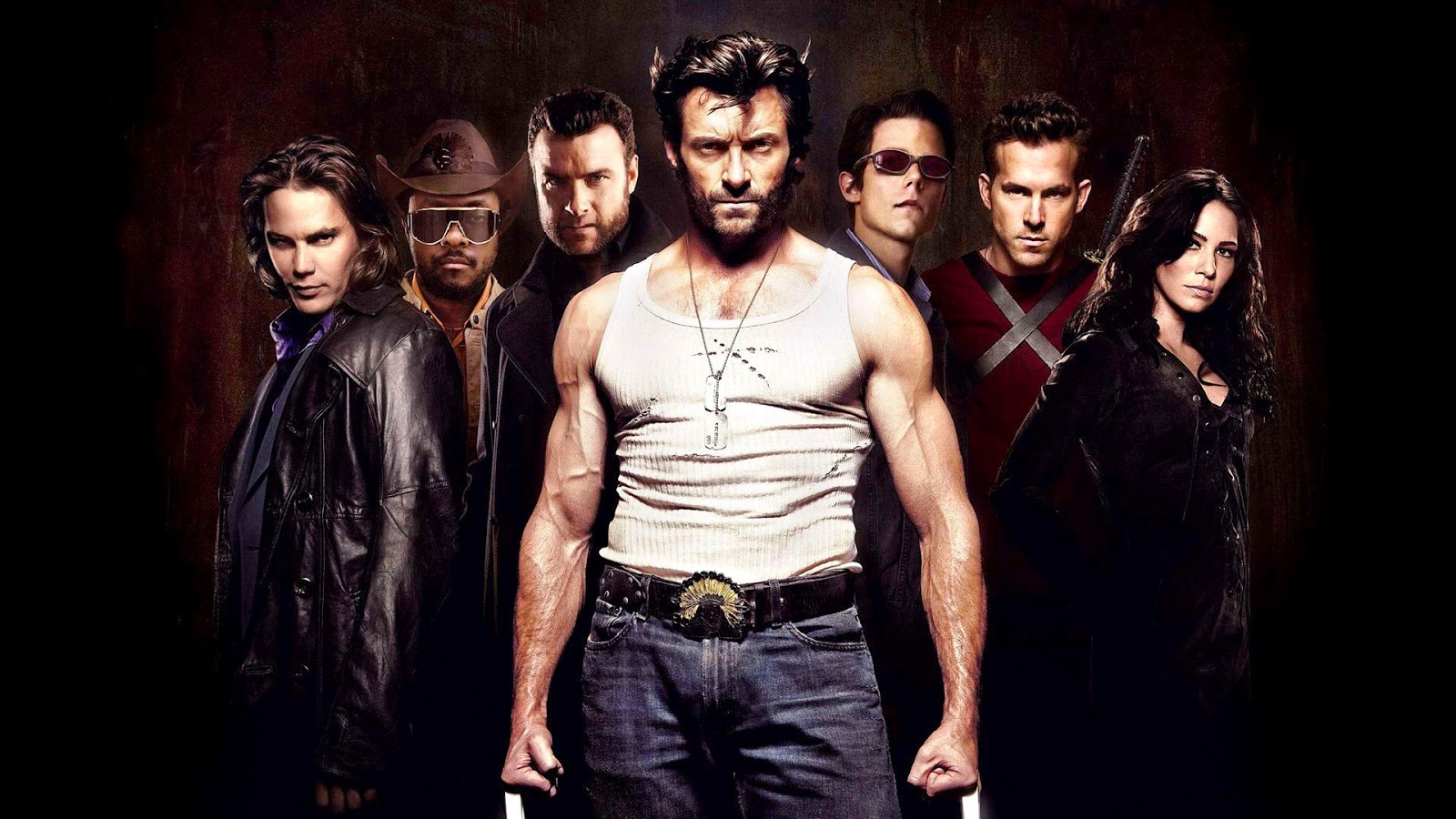
X-Men Origins: Wolverine and X-Men: First Class are the worst perpetrators of continuity errors. Cyclops appears in the former as a teenager, which is an impossibility since he would have been an infant at the time the film takes place. In the latter, Emma Frost is used as one of the primary antagonists even though she'd appeared in X-Men Origins: Wolverine, which takes place a decade after First Class. Moira MacTaggert's appearance in First Class further messes up the continuity. In X-Men: The Last Stand, Moira is adapted faithfully as a Scottish doctor yet she's portrayed in First Class as an American government agent. Tragically, the list goes on.

08. Bad Writing and Poor Character Choice


X-Men and its sequel X2 can be celebrated for their straightforward narratives. Unfortunately, later entries bog down their narratives with unnecessary subplots, which cause the films to run longer than they need to be and complicate the story too much. Much of this can be attributed to bad writing and poor character choice.

X-Men: Days of Future Past is the worst film in the franchise for this. First of all, the storyline itself is heavily altered from its source text. In the comics, it is Kitty Pryde that goes back in time to prevent an assassination. In the film, it was impossible for Kitty to go back because she has not been born yet. This dilemma is "solved" by making up an unnecessary reason for Wolverine to go back in time. It would have been better for them to eschew this explanation and have Xavier go back instead.

Furthermore, DOFP introduces a subplot of Xavier and Beast using a drug to suppress their mutant abilities. It's incredibly pointless and is only there because the filmmakers were too lazy to find a way of choreographing Xavier's wheelchair and spending time on Beast's makeup.

Lastly, the film introduces Quicksilver. Aside from the fact that Evan Peters is a terrible actor and his hair looks like a cheap Halloween store wig, his character provides absolutely nothing to the movie. If they had eliminated the drug subplot, then Quicksilver could have been eliminated and Xavier could have broken Magneto out of prison, thereby providing more room for other characters to shine.

08. Too Many Mutants


It's not easy juggling an ensemble cast, but 20th Century Fox made it that much harder for themselves by throwing just about every mutant imaginable at audiences. The first film kept things simple by sticking to a core cast of three X-Men, Professor Xavier, two new mutants, and four antagonists. These numbers would swell to enormous proportions with its sequels and made it difficult to properly develop the characters used. The two worst films for committing this mistake are X-Men: The Last Stand and X-Men: Days of Future Past. Both films introduce multiple new mutants to the franchise, but both fail to develop them beyond their powers.

07. Rogue


As one of the greatest X-Women in the comics, Rogue is beloved for her transition from villain to superhero. With her signature sass and iconic Southern accent, she's easily one of the most recognizable Marvel characters.

Despite this, Rogue's treatment in the films is abysmal. The first film depicts the character as a timid damsel in distress, while X2 and X-Men: The Last Stand limit her screentime and usefulness. There is so little development made with her character that she merely fades into the background. If this weren't bad enough, all of her scenes were cut for the theatrical release of X-Men: Days of Future Past with the exception of a cameo in the end.

The tragedy in all of this is that Anna Paquin is actually a fantastic actress and should have nailed this role. In fact, she's pretty much made a career out of playing sassy Southerners (see: True Blood) and yet she's completely abandoned by the directors and writers for the franchise.

06. Professor Xavier is a Jerk!


As the patriarch of the X-Men, Professor Xavier helped shape the team and was responsible for giving them their mission to create peace between humans and mutants. Xavier and his dream have been canonized in the comics as the ultimate symbol of hope. He is a champion for all those who have been outcast, perhaps because he knows what it's like having been bullied as a child and been bound to a wheelchair.

With X-Men: The Last Stand and X-Men First Class, Xavier's character is completely undermined by transforming him into a commanding, sexist jerk. The Last Stand gives us a glimpse of an Xavier who wishes to control Jean Grey, while First Class characterizes him as a superficial womanizer who believes in homogenization instead of integration. This is detrimental to the character and spits in the face of who he is supposed to be. Professor Xavier should be viewed as a Martin Luther King-style leader, not some kind of shallow dictator.

05. The Marginalization of Cyclops


For many diehard fans of the X-Men, Cyclops is the greatest leader the team has ever had. He's smart, resourceful and complex, possessing a tortured quality that keeps him from indulging in his arrogance. He's also proven himself to be more dedicated to bringing about human-mutant equality than most of his fellow teammates. Of course, you'd never know this from the movies.

Even with the talented James Marsden at the helm of the character (perfect casting, by the way), Cyclops is pushed to the margins of the films and is relegated to playing the role of a cuckold. This de-valuing of the character has altered the audience's perception of him and harms the franchise.

04. X-Men Origins: Wolverine


'Nuff said.

03. The Dark Phoenix Saga


The Dark Phoenix Saga is regarded as one of the best X-Men stories ever told. It is a masterpiece delivered by the legendary Chris Claremont and John Byrne. It tells the story of Jean Grey's struggle to control a cosmic entity known as the Phoenix and her touching sacrifice to save the life of the man she loves (Cyclops, not Wolverine).

When translated to the big screen, this galaxy-spanning storyline is relegated to a subplot. This was a huge misstep on the part of the filmmakers and was truly the biggest downfall when it comes to the execution of X-Men: The Last Stand. Instead of being treated as the Big Bad she deserves to be, the Dark Phoenix largely stands around looking blankly at things. While X-Men: Days of Future Past would similarly fail its source text (another Claremont-Bryne collaboration), the mistreatment of this story robbed audiences of one of the most touching and epic narratives in the X-Men's history.

02. The Treatment of Characters of Colour


If the hatred for mutants is an allegory for racism and homophobia, then why is it that the films spend the most time developing straight, Caucasian characters? The franchise's treatment of its characters of colour is sadly quite atrocious.

Storm, easily one of the most iconic X-Men and one of its most prominent leaders, plays second fiddle to the men in the films. In fact, were it not for Halle Berry's insistence on exploring the character's powers further on film and her Oscar win in 2001, it's doubtful that she would have been utilized very much in X2 or X-Men: The Last Stand. She was also vastly under-utilized in X-Men: Days of Future Past, with those involved blaming Berry's pregnancy on how much she could have been involved.

Another trend within the franchise is the tendency to kill off characters of colour. Lady Deathstrike is killed in X2, Callisto, Arclight, Psylocke, Kid Omega and Dr. Kavita Rao are killed in X-Men: The Last Stand, Kayla Silverfox and John Wraith are killed in X-Men Origins: Wolverine, Darwin is killed in X-Men: First Class, Angel in the interim between X-Men: First Class and X-Men: Days of Future Past, the Silver Samurai is killed in The Wolverine, and Storm, Bishop, Blink, Sunspot and Warpath are killed in X-Men: Days of Future Past. This distinct lack of respect towards these characters shows a surprising racist undercurrent to the films, especially since there are far fewer deaths among Caucasian characters. This ultimately destroys the entire thematic premise for the X-Men.

01. Everything About Mystique


Despite being one of the most beloved characters from the film franchise, Mystique represents everything that is wrong with the X-Men movies.

First of all, she is completely misunderstood by the writers. In the comics, Mystique is an enigmatic individual whose motives are known only by herself and is characterized as being opportunistic, misandric and extremely untrustworthy. She's also known as a leader, having been responsible for the creation of several iterations of the Brotherhood of Mutants. When translated to film, she is portrayed as a devoted henchman to Magneto in the initial trilogy and is later a weepy victim caught in the middle of Xavier and Magneto's opposing views in the prequel films. In fact, the only way she can define herself is through Xavier and Magneto. Whatever actions she may take are negated by the fact that she has become dependent on the actions of the men in her life. She isn't narcissistic at all or even remotely mysterious. The prequel films make her transparent, so much so that her codename becomes a misnomer. A well-written Mystique would be her own woman and would have originated as such. She is self-made and does not rely on men, she uses them. She wouldn't be some tragic victim. Mystique should be more Amy Dunne than the Females Are More Innocent trope. We should never be able to say this about Mystique, "behind every bitch, there's a man who made her that way."

Secondly, Mystique's body is sexualized to be easily objectified by the male gaze. Whatever agency she may have is diminished by the fact that her body is filmed in seductive poses meant to titillate the viewer. While Mystique may wield her sexuality as a weapon in the comics, she still manages to kick ass with her clothes still on.

Lastly, the character is watered down and made more palatable for audiences by eliminating one of her most notable characteristics -- she is bisexual. In the comics, Mystique is one of the pioneering queer characters whose relationship with Destiny helped to set a precedent for the depiction of same-sex families in superhero comics. As arguably the only person Mystique loved more than herself, Destiny was a compassionate woman who brought a dimension of humanity to the mysterious shapeshifting mutant through their relationship with one another. When it came to men, they were pawns in Mystique's schemes and were rarely anything more than notches in her lipstick case. Her queerness is completely ignored in the film franchise, a further example of the white-washing of the X-Men, and she is transformed into a woman who defines herself through her relationships with men.

Her entire translation to the films suggests that in order for a woman to be marketed to an audience, they must be white (let's face it, they spend a whole lot of time focusing on J-Law outside of her makeup), they must be a good girl deep down, they must be straight and they must be comfortable with revealing as much of their body as possible.