Saturday, 22 November 2014

Review: Catwoman Vol. 3 - Death of the Family


It's not easy being a thief in Gotham City and Catwoman can attest to that fact. After being put through a series of trials at the hands of the Joker, she unknowingly releases demonic energies during a caper to acquire a mystic jewel from the vaults of A.R.G.U.S.

Catwoman Volume 3: Death of the Family collects issues #13-18 and #0 of Catwoman, written by Ann Nocenti and illustrated by Rafa Sandoval.


After a year on Catwoman, Judd Winick was replaced by Ann Nocenti as the book's writer. As a former Spider-Woman scribe and the creator of Typhoid Mary, Nocenti seemed like a great fit for the title. Her first assignment on Catwoman was to give her a new origin story and provide a narrative to tie-in with the Batman event Death of the Family. Truthfully, Nocenti had a lot of fantastic ideas for her first few issues. Sadly, the execution of these ideas was all off.


The first arc of this collection sees Catwoman facing off against the Joker, as she is put through a gauntlet of harrowing trials she is barely able to survive. Intended as the book's tie-in for Death of the Family, the story provides an interesting dynamic between Batman's two most famous antagonists. The Joker uses Catwoman as a pawn in his game to rid Batman of his emotional attachments. What is so fascinating is that Catwoman states that it is the Joker that loves the Dark Knight and denounces her own feelings towards Batman. Tragically, these are the only highlights of the arc. It is otherwise very jumpy and transitions oddly between events. There also isn't enough contextualization going on, which means the reader might be a little confused by the premise of the narrative.


The second arc present in this volume sees Catwoman breaking into A.R.G.U.S.'s vault and accidentally unleashing demonic energies. In doing so, Selina's darker impulses are brought to the surface. In theory, it is a very fascinating premise and had a lot of potential. Sadly, it is squandered by much of what troubled the preceding storyline. The tone is inconsistent and the events are extremely hard to follow. If that weren't enough, Nocenti fails to provide the necessary exposition to explain what A.R.G.U.S. is and what the Black Diamond is that Selina is tasked to steal. She also introduces a male scientist for Selina to play off of, but he's sadly one-note and seems unnecessary to the overall scheme of things.


Thankfully, the collection picks up steam towards the end. Issues #17 and 18 are particularly strong, with the latter being particularly impressive for its interactions between Catwoman and Batman. We're seeing more of a conscience developing in Selina and it makes her seem more grounded than before. The origin story present in issue #0 is also worth mentioning for both its positive and negative qualities. It helps to provide some necessary background information about her past and kicks the door open for a mystery regarding her heritage. Sadly, Nocenti plagiarizes the infamous scene from Batman: Returns wherein Selina is pushed off of a building by her boss and is seemingly resurrected by cats. It feels incredibly out of place and places an element of unoriginality to her origins.


Where Catwoman: Death of the Family is concerned, it is equally as good as it is bad. The pacing is all off and the difficulty with which it takes to follow the story is a major obstacle for this collection. Still, there's no denying that Nocenti had some really interesting story ideas. For this reason, the story is actually that much more palatable. It also helps that the art is actually quite stunning. This volume's greatest redeeming quality is Rafa Sandoval's gorgeous art. His composition is impeccable and his sense of style is very unique. He's truly one of the best artists to work on the Feline Fatale in a long while.

Rating: C+

Friday, 21 November 2014

Review: Ms. Marvel Vol. 1 - No Normal


When 16-year-old Kamala Kahn is exposed to the Terrigen Mists, she discovers that she has developed superhuman powers. A superhero fangirl at heart, Kamala models herself after Captain Marvel and takes up the mantle of Ms. Marvel as Jersey City's resident vigilante.

Ms. Marvel Vol. 1: No Normal collects issues #1-5 of Ms. Marvel, written by G. Willow Wilson and illustrated Adrian Alphona.


There was a lot of hype surrounding Kamala Kahn's introduction. She was promoted as being Marvel's first Muslim superhero to headline an ongoing series and her critical reception was really concerned with this fact. As a Canadian I've had the opportunity to study Marjane Satrapi's seminal Persepolis in university and have been exposed to the groundbreaking Little Mosque on the Prairie, which was a Canadian-produced sitcom whose central theme was the contrast between conservative views on Islam and liberal interpretations of it. As such, it's nice to see that Americans are finally given the chance to see Islam being presented in a more positive and mainstream way. Nevertheless for a title that was intended to be groundbreaking and progressive, Ms. Marvel is actually very conventional and plays it safe. From the characters to the narrative, Wilson relies heavily on established tropes to move the plot forward. For example, Josh and Zoe, the title's resident ignorant and privileged white teenagers, are heavily stereotyped. Likewise, the portrayal of Kamala's parents as unadaptable immigrants straddles the fence between reality and stereotyping. Worst of all, many of the book's central themes and its narrative structure can be easily compared to Brian Michael Bendis' Ultimate Comics Spider-Man origin story for Miles Morales.


While unoriginality may be something that plagues Wilson's story structure and supporting cast, she does do something that is very important. She creates a compelling protagonist who encourages readers to relate to her. Kamala is remarkably well-written for a teenage character and it's quite easy to root for her. She's brave and she has a very strong sense of right and wrong. My personal favourite quality to Kamala is driven by doing what is right and that she has no ego in doing so. She's not seeking fame or recognition for her actions, she's merely acting like the heroes she's worshipped for so long. In fact, she feels a lot like she'd belong in the DC Universe and is very similar to the types of heroines we see over there (namely Batgirl, Supergirl, Mary Marvel and Misfit). This works in her favour particularly since Marvel's teen heroes tend to wallow in their angst. Sure she's got some angst (she's a teenager, it comes with the territory), but who wouldn't be angsty with the parents she has? 


At first glance, Adrian Alphona's art was jarring and unappealing. While it's true that it can be rough at times and the colours appear a little too muddy throughout, Alphona's atypical style is a plus in the title's column. His ability to distinguish characters from one another is to be praised and his work on Kamala is especially remarkable. He doesn't illustrate her as this devastatingly gorgeous girl with the body of a Barbie doll, instead she's this gangly teenager who is quite average in the looks department. This further helps to distinguish the character from Marvel's other Muslim heroines, Dust and Monet St. Croix, the latter of which is noted for her supermodel good looks. Alphona is also a highly skilled stylist. He depicts the characters in a wide variety of looks and gives Kamala a very clear sense of style. I was also impressed by his portrayal of Nakia. In fact, one of my favourite parts of this collection was the concept art in the back. Nakia is totally fierce! Hey G. Willow Wilson, can she get superpowers and be Kamala's sassy sidekick? Kay, thanks.


For anyone looking for an original piece of fiction, Ms. Marvel may not be the place to look for it. G. Willow Wilson really pays homage to the tropes of teen superheroes and this means relying on a lot of predictable plot devices. The situations and supporting characters are familiar, but perhaps that is irrelevant in the grand scheme of things. Origin stories are tricky, so with Kamala's out of the way she can now be placed in more unique and interesting situations. Maybe we'll actually see her team-up with Dust and Monet St. Croix. As the saying goes, it can only go up from here!

Rating: B-

Thursday, 13 November 2014

Review: Catwoman Vol. 2 - Dollhouse


When street kids begin disappearing from their corners, Catwoman makes it her mission to investigate this rash of kidnappings. Since she can't do it alone, she recruits the help of the handsome Detective Alvarez -- much to the dismay of her current partner-in-crime Spark.

Catwoman Volume 2: Dollhouse collects issues #7-12 of Catwoman, written by Judd Winick and art by Adriana Melo and Guillem March.


It's no secret that Catwoman had a rough start in the New 52. The first six issues of Judd Winick's run were problematic. The objectification of Catwoman's body and her reckless behaviour made the title difficult to stomach. Thankfully, Dollhouse rectifies those problems.


Where Catwoman was erratic and excessively violent in the first six issues of the series, she's written to be more grounded and calculating in this set. We're finally getting to see her put some thought into her actions, particularly with how she formulates a plan to save the street kids that are being kidnapped. She's becoming less of a hot mess and more of the antihero we know her as. This is all helped by the fact that there's a clear narrative behind the character and a defined trajectory for her. With Catwoman acting as a champion for the disenfranchised, it not only gives us insight into the character but it also sheds a light on the injustices present in our own society. Every day, sex workers face abuse and are subjected to horrendous crimes, but are ignored by the media and authorities because of their status within society.


Aside from the more layered storytelling, Winick is to be praised for the supporting cast he's created. Diversity is such a hot button topic in the comic book world lately and Catwoman proved to be an example of how creators could incorporate more diversity into their work. Since Gwen, Spark and Detective Alvarez would qualify as visible minorities, their layered personalities and importance to the overall narrative enables them to move beyond consideration as token characters. The decision to present Spark as Catwoman's love interest also defies the norms surrounding depictions of Asian-American men in fiction. They're typically henchmen or maniacal masterminds, but rarely are they ever written as alpha male lovers for Caucasian characters. Even though Winick's portrayal of these characters isn't perfect (two of them are criminals after all), it's still a step in the right direction.


Dollhouse's shortcomings have little to do with the writing or the art (which is fantastic, by the way), but it's rather the editorial team that lets the title down. Winick's arc involving the reveal of the antagonist Dollhouse and Catwoman's subsequent assault on the villain is interrupted by the "Night of the Owls" event that swept across all Batman titles at the time. Forcing Catwoman into this storyline completely derailed the arc of her own book and messed with the pacing. As such, issue #9 ended up being the weakest of the bunch.


For fans of the Feline Fatale, Dollhouse puts the character back on track with where she needs to be. She's an incredible thief who occasionally fights to protect the disadvantaged. The characterization in this collection is much stronger than in the previous and the narrative itself is quite compelling. Melo and March's art match Winick's dynamic storytelling, with beautifully choreographed action scenes and great expressive close-ups of Catwoman's face. Sadly, the interference of "Night of the Owls" really hindered this particular arc and stalled the narrative enough to be a nuisance. Ah, the things publishers will do to drum up sales.

Rating: B

Monday, 10 November 2014

Top 10: Ways 20th Century Fox Ruined the X-Men


When X-Men was released in the summer of 2000, it redefined action films and jumpstarted the superhero trend. It was sleek and stylish, proving that comic books could be adapted in a way that wasn't silly or campy. Despite taking liberties with the source text, X-Men stayed true to the essence of the comics. Mutants were presented as outcasts who are feared and hated by the general public. Its subsequent sequel X2 continued that trend and is considered by some to be one of the best comic book adaptations.

With the release of X-Men: The Last Stand in 2006, everything fell apart. The fidelity towards the comics slipped away and subsequent prequels made this even more evident. To make matters worse, continuity between the films in the franchise became a muddled mess and each entry was bloated with running times that were much longer than necessary. Sadly, every X-Men film after X2 had simply lost their way.

This list explores the many ways in which 20th Century Fox has failed the X-Men and has managed to disrespect one of the most beloved comic book teams in history.

10. Continuity Errors


On the lesser end of the mistakes made in adapting the X-Men is the overabundance of continuity errors between the films in the series. Though it may be small, this lack of attention to detail signals greater issues at play and hinder the cohesion of the franchise.

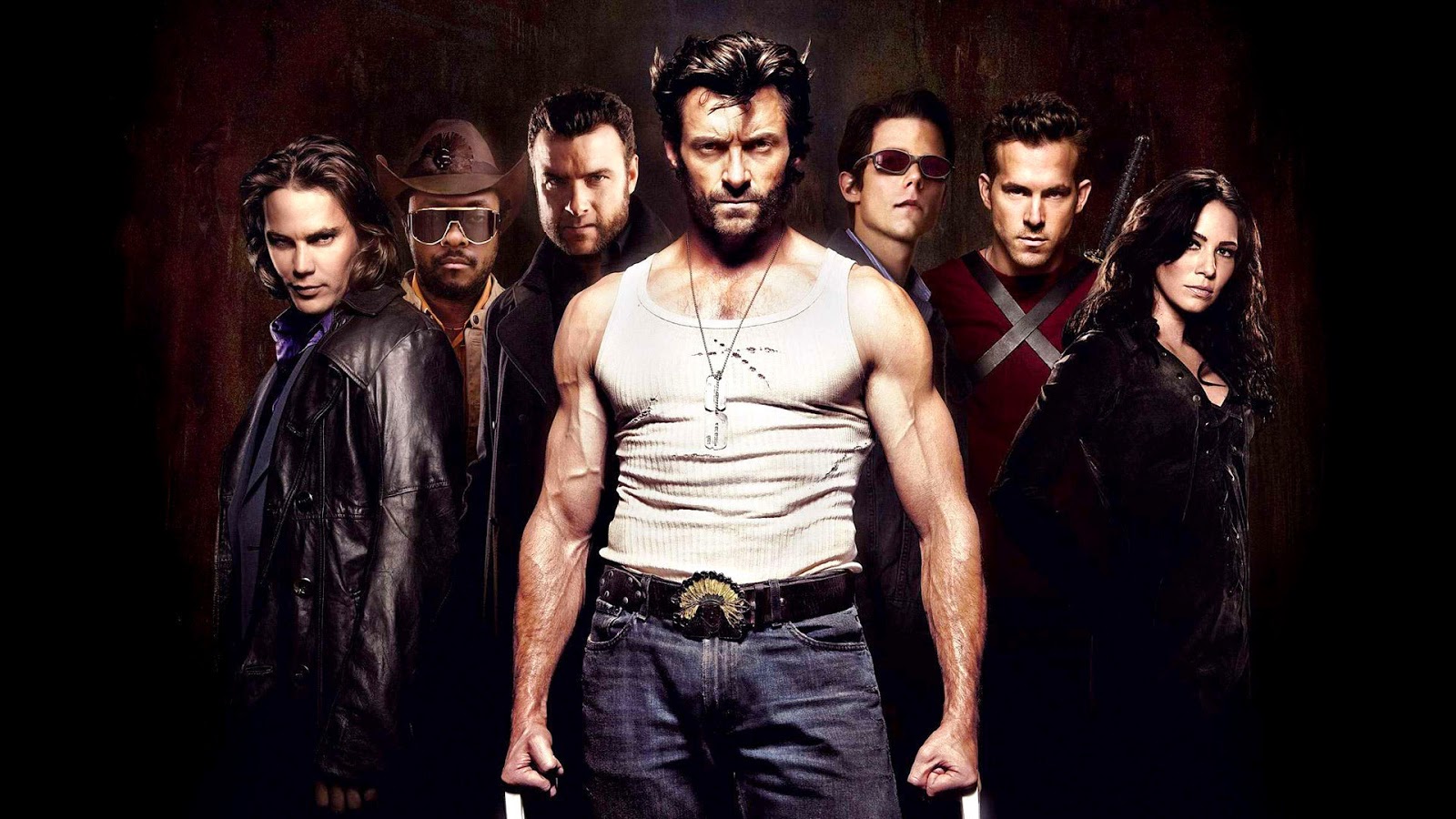
X-Men Origins: Wolverine and X-Men: First Class are the worst perpetrators of continuity errors. Cyclops appears in the former as a teenager, which is an impossibility since he would have been an infant at the time the film takes place. In the latter, Emma Frost is used as one of the primary antagonists even though she'd appeared in X-Men Origins: Wolverine, which takes place a decade after First Class. Moira MacTaggert's appearance in First Class further messes up the continuity. In X-Men: The Last Stand, Moira is adapted faithfully as a Scottish doctor yet she's portrayed in First Class as an American government agent. Tragically, the list goes on.

08. Bad Writing and Poor Character Choice


X-Men and its sequel X2 can be celebrated for their straightforward narratives. Unfortunately, later entries bog down their narratives with unnecessary subplots, which cause the films to run longer than they need to be and complicate the story too much. Much of this can be attributed to bad writing and poor character choice.

X-Men: Days of Future Past is the worst film in the franchise for this. First of all, the storyline itself is heavily altered from its source text. In the comics, it is Kitty Pryde that goes back in time to prevent an assassination. In the film, it was impossible for Kitty to go back because she has not been born yet. This dilemma is "solved" by making up an unnecessary reason for Wolverine to go back in time. It would have been better for them to eschew this explanation and have Xavier go back instead.

Furthermore, DOFP introduces a subplot of Xavier and Beast using a drug to suppress their mutant abilities. It's incredibly pointless and is only there because the filmmakers were too lazy to find a way of choreographing Xavier's wheelchair and spending time on Beast's makeup.

Lastly, the film introduces Quicksilver. Aside from the fact that Evan Peters is a terrible actor and his hair looks like a cheap Halloween store wig, his character provides absolutely nothing to the movie. If they had eliminated the drug subplot, then Quicksilver could have been eliminated and Xavier could have broken Magneto out of prison, thereby providing more room for other characters to shine.

08. Too Many Mutants


It's not easy juggling an ensemble cast, but 20th Century Fox made it that much harder for themselves by throwing just about every mutant imaginable at audiences. The first film kept things simple by sticking to a core cast of three X-Men, Professor Xavier, two new mutants, and four antagonists. These numbers would swell to enormous proportions with its sequels and made it difficult to properly develop the characters used. The two worst films for committing this mistake are X-Men: The Last Stand and X-Men: Days of Future Past. Both films introduce multiple new mutants to the franchise, but both fail to develop them beyond their powers.

07. Rogue


As one of the greatest X-Women in the comics, Rogue is beloved for her transition from villain to superhero. With her signature sass and iconic Southern accent, she's easily one of the most recognizable Marvel characters.

Despite this, Rogue's treatment in the films is abysmal. The first film depicts the character as a timid damsel in distress, while X2 and X-Men: The Last Stand limit her screentime and usefulness. There is so little development made with her character that she merely fades into the background. If this weren't bad enough, all of her scenes were cut for the theatrical release of X-Men: Days of Future Past with the exception of a cameo in the end.

The tragedy in all of this is that Anna Paquin is actually a fantastic actress and should have nailed this role. In fact, she's pretty much made a career out of playing sassy Southerners (see: True Blood) and yet she's completely abandoned by the directors and writers for the franchise.

06. Professor Xavier is a Jerk!


As the patriarch of the X-Men, Professor Xavier helped shape the team and was responsible for giving them their mission to create peace between humans and mutants. Xavier and his dream have been canonized in the comics as the ultimate symbol of hope. He is a champion for all those who have been outcast, perhaps because he knows what it's like having been bullied as a child and been bound to a wheelchair.

With X-Men: The Last Stand and X-Men First Class, Xavier's character is completely undermined by transforming him into a commanding, sexist jerk. The Last Stand gives us a glimpse of an Xavier who wishes to control Jean Grey, while First Class characterizes him as a superficial womanizer who believes in homogenization instead of integration. This is detrimental to the character and spits in the face of who he is supposed to be. Professor Xavier should be viewed as a Martin Luther King-style leader, not some kind of shallow dictator.

05. The Marginalization of Cyclops


For many diehard fans of the X-Men, Cyclops is the greatest leader the team has ever had. He's smart, resourceful and complex, possessing a tortured quality that keeps him from indulging in his arrogance. He's also proven himself to be more dedicated to bringing about human-mutant equality than most of his fellow teammates. Of course, you'd never know this from the movies.

Even with the talented James Marsden at the helm of the character (perfect casting, by the way), Cyclops is pushed to the margins of the films and is relegated to playing the role of a cuckold. This de-valuing of the character has altered the audience's perception of him and harms the franchise.

04. X-Men Origins: Wolverine


'Nuff said.

03. The Dark Phoenix Saga


The Dark Phoenix Saga is regarded as one of the best X-Men stories ever told. It is a masterpiece delivered by the legendary Chris Claremont and John Byrne. It tells the story of Jean Grey's struggle to control a cosmic entity known as the Phoenix and her touching sacrifice to save the life of the man she loves (Cyclops, not Wolverine).

When translated to the big screen, this galaxy-spanning storyline is relegated to a subplot. This was a huge misstep on the part of the filmmakers and was truly the biggest downfall when it comes to the execution of X-Men: The Last Stand. Instead of being treated as the Big Bad she deserves to be, the Dark Phoenix largely stands around looking blankly at things. While X-Men: Days of Future Past would similarly fail its source text (another Claremont-Bryne collaboration), the mistreatment of this story robbed audiences of one of the most touching and epic narratives in the X-Men's history.

02. The Treatment of Characters of Colour


If the hatred for mutants is an allegory for racism and homophobia, then why is it that the films spend the most time developing straight, Caucasian characters? The franchise's treatment of its characters of colour is sadly quite atrocious.

Storm, easily one of the most iconic X-Men and one of its most prominent leaders, plays second fiddle to the men in the films. In fact, were it not for Halle Berry's insistence on exploring the character's powers further on film and her Oscar win in 2001, it's doubtful that she would have been utilized very much in X2 or X-Men: The Last Stand. She was also vastly under-utilized in X-Men: Days of Future Past, with those involved blaming Berry's pregnancy on how much she could have been involved.

Another trend within the franchise is the tendency to kill off characters of colour. Lady Deathstrike is killed in X2, Callisto, Arclight, Psylocke, Kid Omega and Dr. Kavita Rao are killed in X-Men: The Last Stand, Kayla Silverfox and John Wraith are killed in X-Men Origins: Wolverine, Darwin is killed in X-Men: First Class, Angel in the interim between X-Men: First Class and X-Men: Days of Future Past, the Silver Samurai is killed in The Wolverine, and Storm, Bishop, Blink, Sunspot and Warpath are killed in X-Men: Days of Future Past. This distinct lack of respect towards these characters shows a surprising racist undercurrent to the films, especially since there are far fewer deaths among Caucasian characters. This ultimately destroys the entire thematic premise for the X-Men.

01. Everything About Mystique


Despite being one of the most beloved characters from the film franchise, Mystique represents everything that is wrong with the X-Men movies.

First of all, she is completely misunderstood by the writers. In the comics, Mystique is an enigmatic individual whose motives are known only by herself and is characterized as being opportunistic, misandric and extremely untrustworthy. She's also known as a leader, having been responsible for the creation of several iterations of the Brotherhood of Mutants. When translated to film, she is portrayed as a devoted henchman to Magneto in the initial trilogy and is later a weepy victim caught in the middle of Xavier and Magneto's opposing views in the prequel films. In fact, the only way she can define herself is through Xavier and Magneto. Whatever actions she may take are negated by the fact that she has become dependent on the actions of the men in her life. She isn't narcissistic at all or even remotely mysterious. The prequel films make her transparent, so much so that her codename becomes a misnomer. A well-written Mystique would be her own woman and would have originated as such. She is self-made and does not rely on men, she uses them. She wouldn't be some tragic victim. Mystique should be more Amy Dunne than the Females Are More Innocent trope. We should never be able to say this about Mystique, "behind every bitch, there's a man who made her that way."

Secondly, Mystique's body is sexualized to be easily objectified by the male gaze. Whatever agency she may have is diminished by the fact that her body is filmed in seductive poses meant to titillate the viewer. While Mystique may wield her sexuality as a weapon in the comics, she still manages to kick ass with her clothes still on.

Lastly, the character is watered down and made more palatable for audiences by eliminating one of her most notable characteristics -- she is bisexual. In the comics, Mystique is one of the pioneering queer characters whose relationship with Destiny helped to set a precedent for the depiction of same-sex families in superhero comics. As arguably the only person Mystique loved more than herself, Destiny was a compassionate woman who brought a dimension of humanity to the mysterious shapeshifting mutant through their relationship with one another. When it came to men, they were pawns in Mystique's schemes and were rarely anything more than notches in her lipstick case. Her queerness is completely ignored in the film franchise, a further example of the white-washing of the X-Men, and she is transformed into a woman who defines herself through her relationships with men.

Her entire translation to the films suggests that in order for a woman to be marketed to an audience, they must be white (let's face it, they spend a whole lot of time focusing on J-Law outside of her makeup), they must be a good girl deep down, they must be straight and they must be comfortable with revealing as much of their body as possible.

Sunday, 9 November 2014

Review: Pretty Guardian Sailor Moon Crystal - Episode 9


When Tuxedo Mask sacrifices himself in battle, it shocks Sailor Moon into re-awakening as Princess Serenity. This event leads to the emergence of the Silver Crystal and causes Queen Beryl to take drastic actions to secure the illusive jewel.


"Act 9 Serenity -PRINCESS-" picks up where the last episode left off. After a climactic battle against Kunzite, Tuxedo Mask jumps in front of a blast to save Sailor Moon's life. He falls in battle and Sailor Moon transforms into Princess Serenity. For the first time in an adaptation of Naoko Takeuchi's manga, the reveal of Princess Serenity and the Silver Crystal has not been dragged out and happens early on in this series. Ordinarily, this would be a good thing. Instead, it completely deflates the tension and creates melodrama.


This episode follows its corresponding act within the manga so closely that it actually re-creates panels from the source text. This form of tribute should be applauded, especially as these images are actually quite effective when translated to animation. However, this fidelity to the manga also poses a dilemma. This particular chapter in the manga was slow-burning and was a denouement from the previous one, with much of the narrative comprising of exposition and dealing with the aftermath of Serenity's awakening. This works when read, but when animated it's a little dull. The lack of action causes the narrative to drag. In fact, the entire episode is just build-up to the Sailor Guardians travelling to the moon.


Despite the revelations made in this episode, "Act 9 Serenity -PRINCESS" was a bit of a letdown. Its pacing is a mess and is overall a little boring. The animators are also to be chastised for Sailor Moon's transformation into Princess Serenity. It's such a crucial moment and yet it's over in just a few seconds. While this episode should be praised for its fidelity to the manga, it's still too dull and likely should have been condensed and combined with the tenth act of the manga.

Saturday, 8 November 2014

Review: Catwoman Vol. 1 - The Game


As Gotham City's most notorious cat burglar, Catwoman has ruffled more than a few feathers. When a gangster comes after her through her loved ones, it's clear that the Feline Fatale's actions have some very deadly consequences.

Catwoman Volume 1: The Game collects issues #1-6 of Catwoman, written by Judd Winick and illustrated by Guillem March.


When DC Comics relaunched its publications under the New 52 initiative in the fall of 2011, Catwoman came under fire for the treatment of its titular star and with good reason. From its cover to its final page, the first issue of the series depicts the Feline Fatale as little more than a sex object. Winick and artist March exploit the character's body, using every opportunity imaginable to show her in various states of undress. Thankfully, this is toned down significantly after the second issue and Catwoman is depicted in a much more respectful manner.


Beyond the exploitation of her body, Catwoman is also faced with drastic changes to her personality. She's wilder and more violent than she's ever been, which can be quite jarring to long-time fans of the Feline Fatale. It's frustrating to see her act so impulsively and make so many mistakes, especially when it leads to the death of an important character. This initially makes it hard to like Catwoman, but she grows tremendously over the course of these first six issues. She acknowledges her shortcomings and appears genuinely remorseful for her mistakes. It quickly becomes clear that this is not the Catwoman we all know and love, but she very well could be. The Game is merely the first part of her maturation.


In a way, Winick's tone for the title is reminiscent of Ed Brubaker's run on the character's second ongoing series. It is dark, brutally honest and unflinching in its portrayal of the criminal underworld. There is a lot of blood, violence and sexuality, which means that the title is highly inappropriate for younger readers or anyone sensitive to adult situations. This type of content both hinders and helps Catwoman. It depicts the character in a more realistic setting and sets her up as more than just a simple cat burglar. In fact, Winick is to be commended for writing scenes of the character wearing disguises for her capers, channelling her inner Sydney Bristow. It enables readers to take her more seriously and gives March a chance to mix things up with the character's look. On the other hand, Winick and March often go too far with violence. It can be hard to stomach at times, even for people acclimatized to such imagery.


Much of the criticism concerning Catwoman's title involves Guillem March's art. At its worst, it is exploitative and goes too far. There are numerous panels where Catwoman is drawn scantily clad, her melon-shaped breasts spilling out of her clothing. The ridiculousness of such images is distracting and unnecessary as her state of undress offers absolutely nothing to the narrative. It's unfortunate since March's art is otherwise quite stunning. He's extremely expressive when drawing reaction shots and he draws eyes like no other. He also knows how to compose a page and his action scenes are incredibly dynamic.


Catwoman Volume 1: The Game is a tug-of-war between exploitation and legitimate storytelling. The tendency to go overboard with sex and violence does not work in the collection's favour, as it comes across as unnecessary and adds nothing to the overall story. Still, the tone and pacing of the title are to be praised, while the character development is also worthy of acclaim. It's not always easy to see our favourite characters make mistakes, but sometimes it's necessary in order for them to become someone greater. As it stands, The Game fails to reach its full potential and is ultimately hurt by its creative team's poor judgment. Diehard Catwoman fans will undoubtedly be disappointed by Winick's characterization and March's objectification of the Feline Fatale, but it's interesting nonetheless to see the character at a point in her life before she's become the world's greatest thief. Truthfully, I want to love this collection and I do think that it has a lot going for it, but I personally can't get over just how far Winick and March go in their mission to portray Catwoman as a thrill-seeking sex object.

Rating: C+

Thursday, 6 November 2014

Review: Black Widow Vol. 1 - The Finely Woven Thread


With the blood of so many innocents on her hands, the spy and Avenger known as Black Widow sets out on her own to atone for her sins. She's determined to make amends for her checkered past, but a shadowy new organization promises to complicate that journey.

Black Widow: The Finely Woven Thread collects Black Widow #1-6, written by Nathan Edmondson and Phil Noto.


Black Widow is a sophisticated and slow-burning title, with shades of noir. It also shares the same tone as Ian Fleming's iconic Cold War-era James Bond novels. Its protagonist is a stoic heroine who attempts to remain detached from the world around her. Even still, she is far from being the frigid Russian princess many have depicted her to be in the past. Edmondson gives the reader glimpses of her compassion, which makes her sympathetic and far more complex than how she is usually portrayed. Black Widow is also often plagued by a tendency to presented as a flawless super spy. Here, she makes mistakes and is able to admit when she is out of her depth. It's incredibly refreshing and adds a sense of realism to the title.


Beyond his impeccable character work, Edmondson establishes the perfect cast and tone for the book. Rather than clutter his first six issues with guest stars galore, he keeps it simple with Maria Hill and Natalia's lawyer Isaiah acting as her supporting cast. The former connects the title to the Marvel Universe while the latter answers the question of how Natalia manages her finances.

When it comes to the tone, Black Widow is incredibly stylish and is boosted by a simmering noir aesthetic. For fans of Marvel's film or younger readers, this book may be a bit of a shock. It's dark and gritty as it deals with complex moral issues. Black Widow isn't your average superhero. She will kill when necessary and maintains an ambiguous moral code. It works well for the character and helps to differentiate her from her fellow Avengers.


The art in Black Widow is near perfection. Phil Noto's painted style suits the tone of the book to a tee and contributes to the overall aesthetic Edmondson has set forth with his writing. His characters are beautiful, but not in an exploitative way. He doesn't exaggerate proportions and doesn't dress the titular heroine in skimpy clothing. This adds a sense of class and elegance to the title. Sadly, his sketchy style does seem rushed and unfinished in some panels. Thankfully, these panels are few and far between.


Black Widow: A Finely Woven Thread is one of the most interesting books Marvel has released in quite some time. It's stylish and elegant, with just the right combination of character development and action. Beyond that, it's also one of the most accessible comics in Marvel's wheelhouse. Unlike most other titles, it does not depend on the reader's knowledge of years upon years of continuity. It also eschews the trend of comics being written with the intention of the stories being published as trade paperbacks. Edmondson writes both concise and compelling one issue stories and multiple issue arcs. For these reasons, Black Widow stands strong as a refreshing and innovative comic book worth reading.

Rating: A-